# 9. Inspect Thermal Images

Thermal images obtained by a drone can be analyzed by using Picstork. These thermal images are uploaded as an imageset while creating a task.

The user may perform manual annotations on these images by using various tools provided by PicStork as follows:

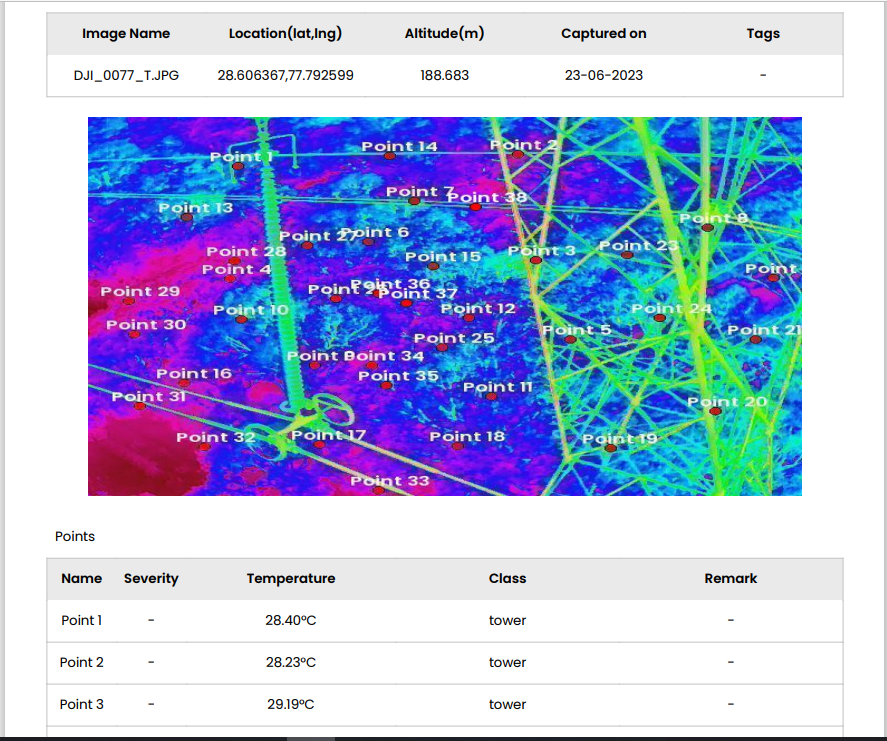
* **Point Annotations:** Point annotations are used to annotate a point on the map as shown in the following image.&#x20;

<figure><img src="/files/NoF3LGF3TWHymoFPnZMr" alt=""><figcaption><p>Point Annotations</p></figcaption></figure>

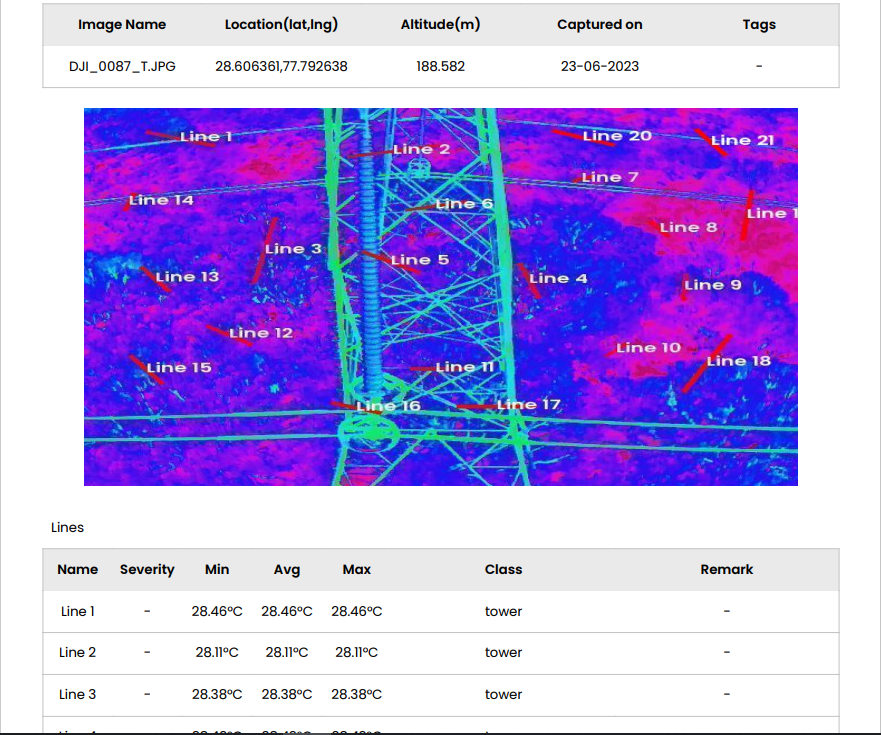
* **Line Annotation:** This tool is used to cover the points on a selected line as shown in the following image.

<figure><img src="/files/PPqgSVbDSlLwbbwqWadD" alt=""><figcaption><p>Line Annotations</p></figcaption></figure>

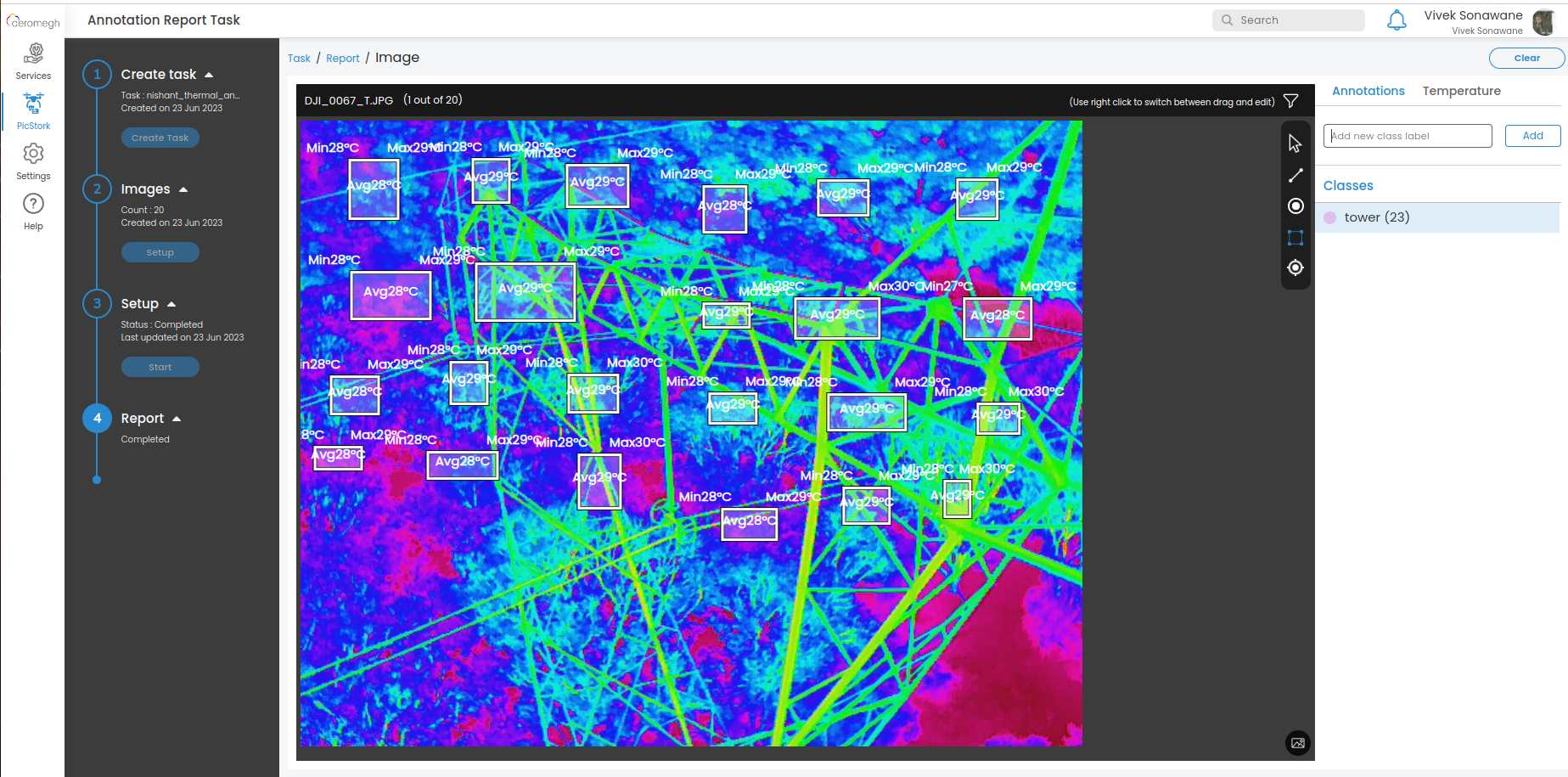
* **Rectangle:** This tool is used to cover the area marked by a rectangle as shown in the following image.

<figure><img src="/files/PC9q2K867jocZVhCzcbn" alt=""><figcaption><p>Rectangle Annotation</p></figcaption></figure>

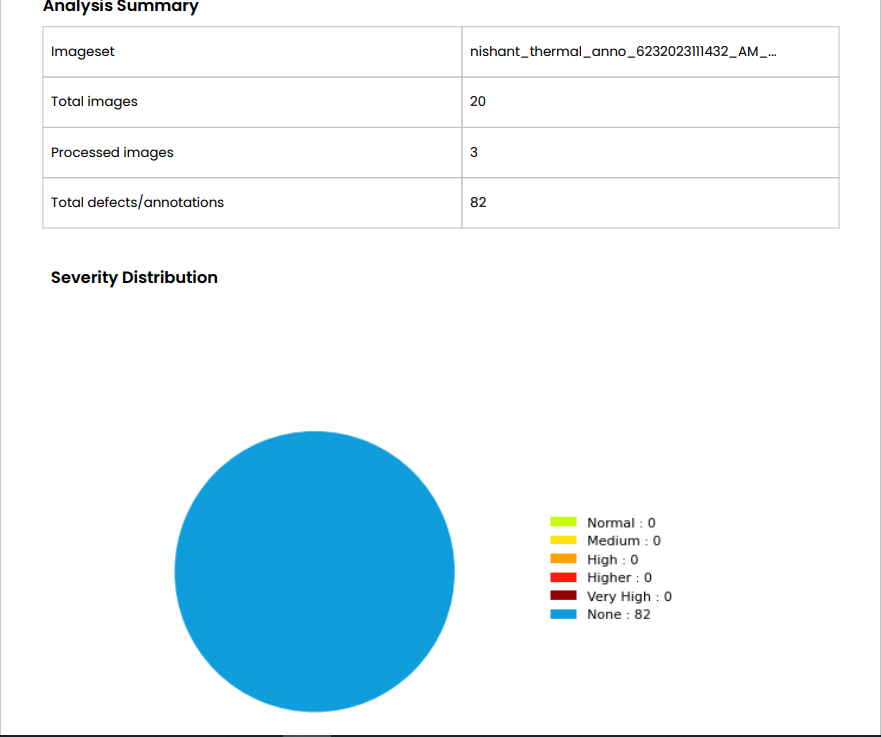
The report generated by PicStork for thermal images contains minimum, maximum and average temperatures for line and rectangle annotations whereas, temperature values will be displayed for point annotations.

<figure><img src="/files/eM5e5u7U6t7MEC3TScvb" alt=""><figcaption></figcaption></figure>

<figure><img src="/files/Y1xcrav6PaFjJI13mIFz" alt=""><figcaption><p>Details of Rectangle annotated images</p></figcaption></figure>

<figure><img src="/files/8uWUmOosxO59NKpTEdeN" alt=""><figcaption><p>Details of Point Annotation</p></figcaption></figure>

<figure><img src="/files/ZlmAYhBlsjHF4reNw4mx" alt=""><figcaption><p>Details of Line Annotations</p></figcaption></figure>


---

# Agent Instructions: Querying This Documentation

If you need additional information that is not directly available in this page, you can query the documentation dynamically by asking a question.

Perform an HTTP GET request on the current page URL with the `ask` query parameter:

```
GET https://picstork-docs.aeromegh.com/9.-inspect-thermal-images.md?ask=<question>
```

The question should be specific, self-contained, and written in natural language.
The response will contain a direct answer to the question and relevant excerpts and sources from the documentation.

Use this mechanism when the answer is not explicitly present in the current page, you need clarification or additional context, or you want to retrieve related documentation sections.